
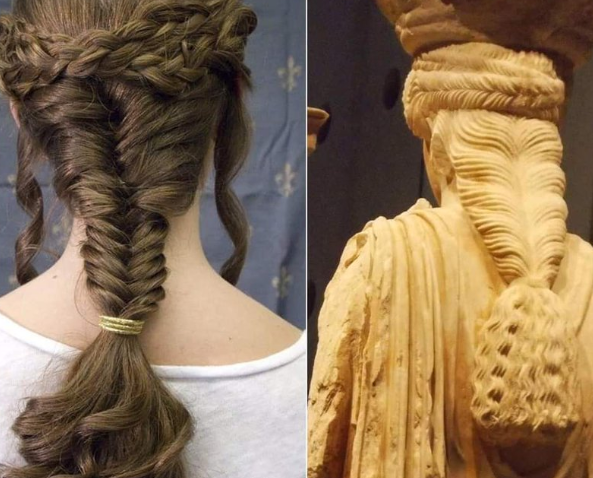
In ancient Athens, a woman’s hairstyle was more than mere fashion—it was a symbol of her status and social standing. Women of wealth and high rank often wore elaborate hairstyles, especially when attending public events like religious festivals. These styles not only conveyed beauty but also reinforced their place in the social hierarchy, marking them as distinguished members of society.
Short hair is now cool and easy to manage. Benefits of Short Hair:
Short hair offers a range of practical, aesthetic, and psychological advantages that can make it an appealing choice for many people, regardless of gender. While personal style plays a big role, here are some of the most commonly cited benefits, drawn from expert insights and user experiences:
- Low Maintenance and Time-Saving: Short hair requires less washing, drying, and styling, freeing up your daily routine. You can often air-dry it or achieve a polished look in minutes, making it ideal for busy lifestyles. therapyhairstudio.com +2
- Healthier Hair and Scalp: With less length, there’s reduced risk of split ends, breakage, and product buildup on the scalp, promoting better overall hair health and easier access for treatments like massages or oils. therapyhairstudio.com +2
- Cooler and More Comfortable: In warmer climates or during hot weather, short hair allows better airflow to the scalp, helping you stay cooler and reducing sweat-related issues. shaakyaspa.com
- Versatility in Styling: Despite the shorter length, options like pixie cuts, bobs, or textured crops offer endless ways to experiment with looks, from sleek to tousled, without needing heavy tools or products. therapyhairstudio.com +2
- Boosts Confidence and Fresh Perspective: Going short often symbolizes a new chapter, enhancing self-assurance and drawing attention to your facial features for a more youthful, modern vibe. Many report feeling lighter and more empowered after the chop. stylist.co.uk +5
- Cost-Effective and Professional Edge: You’ll spend less on hair products, trims, and salon visits over time. Plus, it can project a sharp, competent image in professional settings. therapyhairstudio.com +1
Ultimately, the “best” haircut depends on your face shape, lifestyle, and what makes you feel great—short hair just happens to tick a lot of practical boxes! If you’re considering a change, consulting a stylist can help tailor it to you.
Long hair held deep cultural meaning across many ancient civilizations, representing elegance, freedom, and affluence for both men and women. From ancient Greece to imperial China, flowing hair was seen as a sign of nobility and personal liberty. In contrast, short hair was often associated with servitude and punishment. In several regions, including the steppes, Japan, Mora, and Northern Europe, forcibly cutting someone’s hair was considered a grave insult, symbolizing disgrace or enslavement.

“In ancient Athens, the female hairstyle was a distinctive symbol of status worn by women of high social rank and wealth when they appeared in public settings such as religious festivals. Throughout ancient times, long hair was considered elegance, freedom and wealth for both men and women in almost all cultures. It’s the same in all of them, from ancient Greece to China. In fact, in regions such as steppe cultures, Japan, Mora, and Northern Europe, short hair was a characteristic of slaves, and cutting one’s hair was one of the most serious insults that could be done to a person. Almost all Greek gods and goddesses were depicted with long hair, and all mythological heroes had long hair. Philosophers, poets, all high-status professionals, clergy, kings and queens always have long hair.”




- Haktan Erdoğuş
This reverence for long hair extended into mythology and society’s upper echelons. Greek gods, goddesses and mythological heroes were consistently depicted with long, flowing locks, a reflection of their divine and heroic status. Likewise, philosophers, poets, priests, and royalty typically maintained long hair as a visual marker of their intellectual, spiritual, or political importance. In nearly every ancient culture, hair was far more than aesthetic—it was an expression of identity, power, and dignity.








 South Wind
Leave a comment