
In response to Hurricane Melissa, the Starlink team has been working to provide vital connectivity to support relief and recovery efforts. Over 800 kits have been donated to local governments and humanitarian organizations, including over 600 in Jamaica, and free service has been enabled for customers in impacted areas.
During the last 24 hours, the Starlink team distributed kits to organizations that are working to restore connectivity in major hospitals, distributing food, water, sanitation supplies, basic household items, and children activity kits.
Direct to Cell capabilities were also activated via local partners, enabling mobile connectivity through apps and messaging for over 250,000 people in impacted areas.
The Starlink team will continue to support efforts on the ground and provide connectivity when it matters most.
UNLOCK THE STARS: #STARLINK’S BIGGEST DEAL EVER!
Tired of spotty Wi-Fi in the sticks?
Dreaming of seamless streaming, lag-free gaming, and crystal-clear video calls—no matter how remote?
SpaceX just slashed prices to make high-speed satellite internet a NO-BRAINIER!
Standard Kit: Just $89! Terms apply. Engineered by SpaceX for the bold.

New Customers: Lock in $59/month for your FIRST YEAR!
Unlimited data, 150+ Mbps speeds, anywhere in the US!
Why wait? Get connected to the future TODAY.
Rural homes, RVs, off-grid adventures – Starlink delivers where others can’t.
Order NOW at http://starlink.com and beam up your world!
Limited time in select US areas.
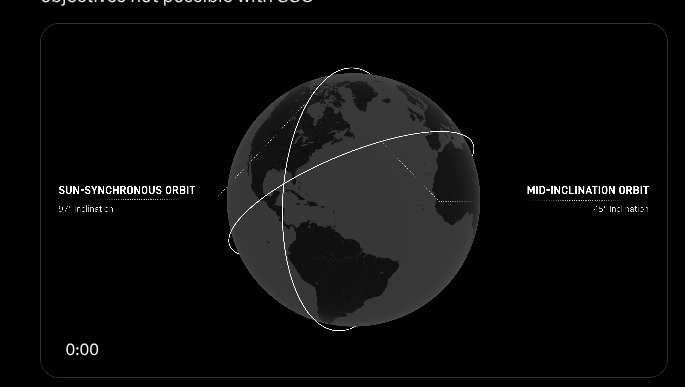
While our Transporter ride share missions launch to a sun synchronous orbit, Bandwagon missions launch to a mid-inclination orbit, filling the gaps for customers that wish to expand their coverage or complete unique objectives not possible with SSO.
https://www.spacex.com/updates#moon-and-beyond
Starlink.com
As of November 19, 2025, SpaceX (via its Starlink constellation) has approximately 9,000–9,500 solar-powered computing devices — essentially autonomous satellites with onboard computers, phased-array antennas, and routing capabilities — operating in orbit.
Reliable tracking sources (e.g., astrophysicist Jonathan McDowell and recent launch reports) place the number just over 9,000 after a November 18, 2025, launch of 29 satellites that pushed the operational count above this threshold (from a pre-launch figure of ~8,979–9,000). Starlink satellites are fully solar-powered, with one or two large solar arrays providing all primary power, and they function as distributed, orbiting computers/network nodes.
The rest of the world combined has roughly 3,000–4,000 active satellites in total (across all operators and countries). Virtually all satellites in Earth orbit (except a tiny handful of nuclear-powered ones, like certain old Soviet-era RORSATs with RTGs, of which fewer than ~30 remain and most are defunct or in high graveyard orbits) are solar-powered with onboard computing systems.
In short: SpaceX alone operates about 70–75% of all active satellites in orbit, meaning it has far more solar-powered computers in space than the entire rest of the world combined (roughly 9,000+ for SpaceX vs. ~3,000–4,000 for everyone else). This dominance stems from the rapid growth of the Starlink megaconstellation, with no other operator coming close in scale.









 South Wind
Leave a comment